Introduction
Hastelloy alloys are renowned for their excellent resistance to corrosion, especially in extreme environments. Two commonly used variants in industries requiring durable and high-performance materials are Hastelloy B2 flanges and Hastelloy B3 flanges. While both flanges offer exceptional resistance to harsh chemicals and high temperatures, they differ in specific applications and performance characteristics.
This blog post aims to help professionals, including engineers, procurement managers, and manufacturers, understand the key differences between Hastelloy B2 and Hastelloy B3 flanges, their pros and cons, and how to make an informed choice when sourcing these products.
We will also explore the industry standards, including UNS, DIN, and ASTM, to ensure that the Hastelloy flanges meet the required specifications. Additionally, we’ll highlight Hastelloy B2 flanges manufacturers in India, Hastelloy B3 flanges manufacturers in India, and key exporters and stockists to guide buyers in the Indian market.
1. What Are Hastelloy B2 and B3 Flanges?
Before diving into the differences, let's define Hastelloy B2 flanges and Hastelloy B3 flanges:
-
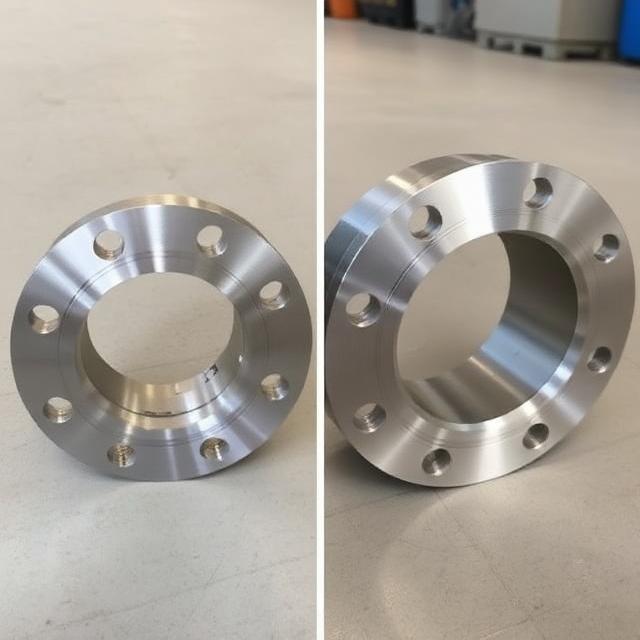
Hastelloy B2 Flanges: Made from Hastelloy B2, a nickel-molybdenum alloy, these flanges are known for their excellent resistance to hydrochloric acid, sulfuric acid, and other harsh chemicals. They are commonly used in chemical processing industries where highly corrosive materials are involved.
-
Hastelloy B3 Flanges: The Hastelloy B3 alloy is a refined version of B2, offering enhanced performance in terms of mechanical properties, resistance to stress corrosion cracking, and improved weldability. It is an ideal choice for industries dealing with high-temperature environments and aggressive chemical conditions.
Both of these alloys are a part of the Hastelloy family of superalloys, known for their outstanding corrosion resistance, especially in acidic environments.
2. Key Differences Between Hastelloy B2 and Hastelloy B3 Flanges
Corrosion Resistance
-
Hastelloy B2 Flanges: Known for exceptional resistance to hydrochloric acid and other reducing acids, Hastelloy B2 is particularly effective in environments with chlorine and sulfuric acid. However, it is more prone to stress corrosion cracking under certain conditions, such as when exposed to oxidizing acids like nitric acid.
-
Hastelloy B3 Flanges: Hastelloy B3 offers improved resistance to stress corrosion cracking and better mechanical strength compared to Hastelloy B2. It also exhibits greater weldability, making it suitable for high-stress applications in industries like petrochemical and pharmaceuticals.
Mechanical Properties
-
Hastelloy B2 Flanges: This alloy has good mechanical strength but is somewhat limited in high-stress environments compared to B3. It is often used in low to medium-pressure systems where chemical resistance is the primary requirement.
-
Hastelloy B3 Flanges: Hastelloy B3 is specifically designed to handle higher stress and higher temperatures. It is better suited for high-pressure systems and severe industrial applications where both strength and corrosion resistance are essential.
Weldability
-
Hastelloy B2 Flanges: While Hastelloy B2 can be welded, its susceptibility to stress corrosion cracking during welding makes it slightly less desirable for applications that require precise welding.
-
Hastelloy B3 Flanges: Hastelloy B3 offers significantly better weldability, reducing the risk of defects and making it a more reliable choice for complex welded joints.
Cost
-
Hastelloy B2 Flanges: Typically, Hastelloy B2 is less expensive compared to B3, making it a more cost-effective solution for general corrosion-resistant applications.
-
Hastelloy B3 Flanges: Due to its enhanced properties, Hastelloy B3 flanges are generally more expensive. However, the additional cost is justified in high-performance applications where corrosion resistance and mechanical strength are critical.
3. Applications of Hastelloy B2 and Hastelloy B3 Flanges
-
Hastelloy B2 Flanges: Ideal for use in chemical processing, acid pickling, pharmaceutical applications, and desalination plants where reducing acids and high concentrations of chloride are involved.
-
Hastelloy B3 Flanges: Due to its superior mechanical properties, Hastelloy B3 flanges are used in petrochemical industries, chemical reactors, heat exchangers, and high-pressure systems where both chemical resistance and strength are critical.
4. Industry Standards for Hastelloy B2 and B3 Flanges
-
UNS N10665: Universal classification ensuring material consistency.
-
ASTM B366: Covers wrought nickel alloy flanges and fittings.
-
DIN 17744: German standard for nickel alloys.
-
ASME B16.5: Defines flange dimensions and pressure ratings.
5. Hastelloy B2 & B3 Flanges Manufacturers in India
India hosts several reputed Hastelloy B2 flanges manufacturers and Hastelloy B3 flanges manufacturers supplying high-quality products to chemical, pharmaceutical, aerospace, and petrochemical industries.
Conclusion
Both Hastelloy B2 flanges and Hastelloy B3 flanges offer excellent corrosion resistance. The final selection depends on application-specific requirements such as weldability, operating pressure, temperature, and budget.
Call to Action
For reliable sourcing of Hastelloy B2 and Hastelloy B3 flanges, contact leading Hastelloy flanges manufacturers in India for technical support, certifications, and competitive quotations.